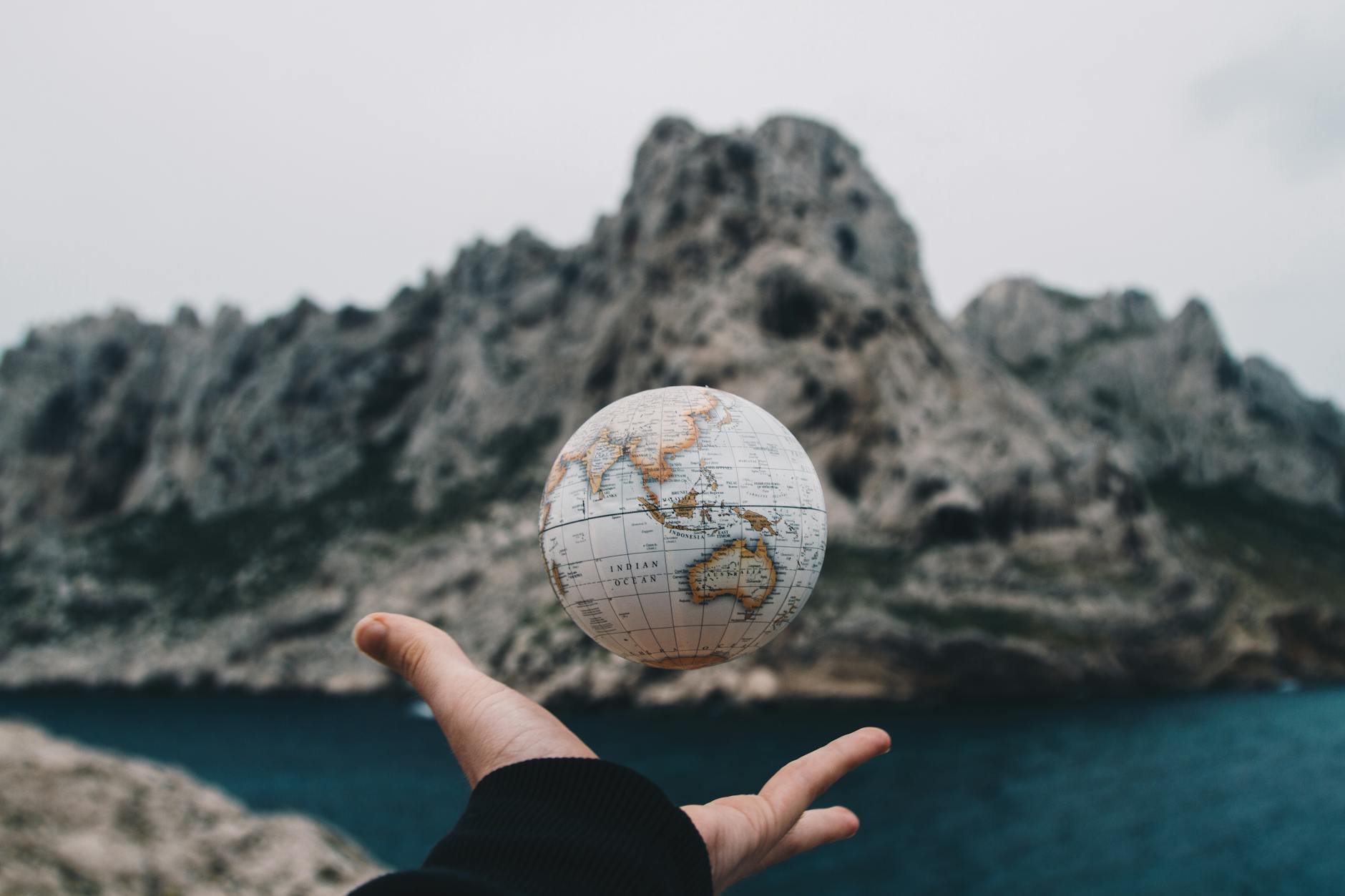
Worldbuilding. You either love it and spend all your time dreaming up rules rather than writing, or you hate it and try your best to avoid it despite writing fantasy or scifi.
Or you are in the middle, which is where you should be. You have a healthy appreciation for what makes worldbuilding so special, but you also don’t obsess over it.
Worldbuilding does not need to be complicated to be effective. So how do you strike the right balance? Let’s take a look.
As always, this is just my opinion based on my own efforts creating The Eirenic Verses. You can disagree and that is fine. However, I hope you’ll consider thinking about what I offer here as you craft your own world.
⤝❖⤞
A lot of what people focus on when worldbuilding is not what the audience cares about.
Very few people like to read a book littered with random terms they have to keep track of. We want to build a unique world, but we also don’t want to throw such an extreme amount of lore at our readers that they tune out.
At the same time, we want to create a world that feels lived-in and interesting so that readers want to know more. How do we do this?
⤝❖⤞
Consider what you think about foreign countries in our world.
Most of us will have a general concept of a country but only will think about the specifics if it is currently relevant.
When I think about any country, this is usually the order my mind takes when forming my mental framework:
- Cuisine
- What the people are like according to my own stereotypes/cultural perceptions
- Climate and geography
- Unique flora and fauna
- General landmarks, but not necessarily specifics
- Clothing styles
- Cultural icons
- General overview of the history
- Language, but not necessarily specifics of the language
- Religion
- Folklore
- Any festivals I might know of
Your own list may have these in a slightly different order, but it’s probably what you most think about.
Notice that you will likely not think about these things:
- Political system
- Specifics of the language
- Interpersonal hierarchies
- International relations
- Specific landmarks
- Specific historical events
- Famous figures
So why do we think like this? Because in real life, we’ve only got so much time and energy for stuff not directly related to us.
If I tried to memorize specific details of every country in the world, I would go insane. I have better things to do, so I create a general image of a country based on pictures I’ve seen, people I’ve met, food I’ve eaten, and so on. You do the same thing.
To be realistic, you do not need to be specific. You need to approach worldbuilding the same way people generate their world knowledge: basic concepts and visual imagery.
⤝❖⤞
What to emphasize in worldbuilding
So let’s break this down on what you want to think about when creating a world.
Food is one of the most accessible elements of a culture.
Food is how many people learn about different cultures for a simple reason: if you have the ingredients, you can cook food from anywhere. You don’t need to be introduced to it by a native of that culture.
Plus, humans like food.
Think about these things when considering national cuisines and eating habits of your fantasy world:
Do they have spicy food? Bland food? Heavy hearty dishes?
Is most food served hot or cold?
What kind of spices and vegetables do they use? Root vegetables, beans, cinnamon? Salt?
What type of meat do people eat (if any)? Seafood, poultry, beef, pork?
How is bread prepared? What is it made of? (Look, nearly every culture has some sort of bread. We love carbs.)
What about pasta? Does that exist here?
Are desserts important? What are they made of?
What kinds of drinks do they have? Coffee, tea, milk, lemon water?
Is alcohol a thing? What kind of alcohol? How often do people drink? Are there bars?
How often do people eat, and when? Do they have the typical three square meals, or do people eat kinda whenever they feel like it?
Do people prepare food at home or are there restaurants?
Are communal dinners common?
⤝❖⤞
Cultural stereotypes provide tension and can help craft your characters.
Are people in your culture known for their boldness? Their cunning? Their resilience? Their standoffishness? Their fiery tongues, or their passive-aggressive jabs?
You can play with a lot of this, either confirming or denying the assumptions through your characters.
Here are some potential cultural stereotypes you could use:
- Passionate and argumentative
- Liberal and peaceful
- Divisive, with a lot of infighting
- Witty and poetic
- Cold and unapproachable
- Unfailingly polite
- Rude and closed-off
- Hard-working, “salt of the earth”
- Scrupulously on time
- Lackadaisical, often late
- Have large families
- Move around a lot
- Posh and upper-crust
Remember that just like in our world, some regions of a country may have slightly different stereotypes. You see this in the United States; for example, the West Coast is seen as laid-back and liberal, while the East Coast is unapproachable but also liberal.
⤝❖⤞
Landscape gives us an idea of where we are and what to expect.
Landscapes are some of my favorite aspects of worldbuilding rather than intricate magic systems and political concepts. Readers get a good sense of environment when you focus in on landscape and how it impacts the characters.
You can also build a culture off your landscape, such as how certain geographic features may influence peoples’ attitudes and lifestyles.
⤝❖⤞
Climate influences how people behave.
Hot climates make people need to conserve energy, so they may take afternoon naps in the worst of the heat. They might value relaxation and calm over industry and productivity because bro, have you ever tried to even walk outside in the Florida heat? Shut up and get me air conditioning.
Cold climates make people need to stay active to stay warm, but they can also produce a sense of isolation. Think about how outdoorsy the Finnish are but how they looove their personal space.
Temperate climates are probably a bit more even-tempered, but as weather changes get more extreme, people will vary their behaviors based on the seasons: spending more time outdoors during summer but holing up during winter.
⤝❖⤞
Flora and fauna help the world feel real.
When I worldbuild, I often base my cultures on a real place and what kinds of animals or plants are there. For example, Breme is based on Mongolia so I have herbivores, big raptors, horses, and a lot of grasses.
Sina is based on Japan so I’ve got islands, caves, deep rocky forests, lizards, cute frogs, and many birds. Oh and bears.
A warm climate will have lots of reptiles. Sea life will be important in a coastal area. Swamps might have big aquatic predators. Mountains will have hardy creatures that can climb. A savannah area will have huge herbivores and fast, hungry predators.
⤝❖⤞
General cityscapes or villages are great for providing a sense of place.
Do people build low spread-out cities or tall rickety homes? What kinds of building materials do they use? Are there lots of markets, bars, apocetharies, temples or churches? What do homes look like here? What are any unique architectural features?
This gives a sense that we are in a different but specific world that has a rich culture.
⤝❖⤞
Clothing tells us what people prioritize.
Cold places will have lots of layers. Hot places will have soft draping outfits or very skimpy outfits.
Natural materials that are easily available will make up the majority of the clothing in a fantasy setting. You wouldn’t have people wearing cotton in a place that doesn’t grow cotton. If there are lots of sheep, people will wear wool. If there’s lots of cattle, people will wear leather.
You can also think about adornment. Is jewelry common? What type? How is it made? Why is it important? Is it a status symbol, a way to keep wealth, or perhaps ways to honor ancestors?
⤝❖⤞
Cultural icons demonstrate what the society values.
A warlike culture will prioritize weaponry. A pacifist culture will think about art and music. A nomadic culture may have a rich oral tradition. An agrarian society will emphasize farming rituals.
Think of a few things that symbolize your society, whether that’s musical instruments, weaponry, textiles, statues, or jewelry. Consider how those traditions could have come about and why.
⤝❖⤞
Folklore and mythology offer an offbeat but important sense of history.
Folklore is often tied up with many other factors of a society, such as their religion, landscape, history, and overall values.
You can also think about cryptids or ghost stories. Isolated and difficult terrain often makes people think of monsters lurking in the woods. Areas with lots of caves will tell spooky stories about what is down there. Coastal areas develop myths about ghost ships.
⤝❖⤞
Idioms, turns of phrase, and gestural quirks tell us more about the culture without overwhelming readers.
I’m not talking about making a whole new language here, but rather about idioms and turns of phrase. Think about all the fun idioms that English has, like “beating around the bush” or “break a leg.” Without cultural context, you can’t understand them, so you’ll have to incorporate an explanation without actually stating it.
For example, you can have a character say “the horses are running fast” as they look out the window to see a sheet of rain. We can guess from this that the idiom is rain = horses, so lots of rain = fast horses. We’ll understand from this that this culture probably loves horses; maybe they’re a formerly nomadic race.
Gestures, like whether people give thumbs-up, point with their index, or bow with their hands to their chest all give us a feeling of the culture without being overwhelming.
⤝❖⤞
What not to emphasize
Now that we’ve gone through some things to focus on, let’s talk about what you don’t need to make up for your world.
A whole-cloth language
Don’t even make up the language at all. Say there’s a language and then write the rest of it in English.
Made-up languages are irritating for readers because they want to focus on the characters and plot, not mysterious words they need to translate.
⤝❖⤞
Specifics of a magic system
You’re not going to instantly summon up all the rules of magical realms when you visit a new country; you might not even know them. And your readers won’t be too interested in them either.
If you’ve got pages and pages of notes on all the intricacies of the magical system, you have too much. Pare it down.
⤝❖⤞
Political systems
Unless you’re writing a fantasy where politics are absolutely critical to the plot, you can just reference the political system in passing and maybe elucidate a few key elements, like who the leader is, how power is transferred, etc. You don’t need to go into all the specifics because most people are not going to care.
⤝❖⤞
Hierarchies
Please don’t lay out the entirety of an army’s ranking system or how someone is promoted. Make up something consistent and stick with it, but don’t go into exhaustive detail. People aren’t going to sit and question whether a captain is above a lieutenant or how long it takes to become a general.
We’ll know that a general is a big deal if the characters make it a big deal. We’ll know who the head of the army is but we don’t need to know how they got to that position.
⤝❖⤞
Exact city layouts
You do not need to tell us where everything is in relation to one another. Tell us characters are moving from one landmark to another. You could say “this is across a bridge, this is up in the mountains, these buildings are right next to one another, these two buildings are in opposite ends of the city.” That’s plenty.
If somewhere is very far away, just show them travelling there and how long it takes. You don’t need to measure it in miles or leagues or whatever. We will guess that if it takes them a week to walk there, it’s pretty distant.
⤝❖⤞
Economic systems
We just need the basics here: mercantile, capitalist, bartering, etc. We don’t need to know if the coinage is pegged to a certain precious metal or if people invest their money or how people are paid. That’s boring.
In my world, I have two currencies: quillim for Breme and barnals for Sina. What’s the exchange rate? I don’t know and don’t care. How much is one quillim worth? One quillim is not a lot but 2,500 quillim is. How much is the average person paid? Doesn’t matter. Is it a fiat system? No clue. Do people keep lots of coins on them? No one is asking that. It’s not important.
⤝❖⤞
Transit systems
Tells us if the roads are cramped, spread out, nonexistent, poorly maintained. Tell us if there are road blocks or toll booths. Tell us if there are roving bandits. The more physical and sensory you can get, the more real it feels.
You do not need to give us maps, measurements, construction processes, and so on, unless this is absolutely desperately plot relevant. Doesn’t matter. People get from one place to another on a big road or a small road or a poorly maintained road or whatever. That’s all we need.
If you got to the end of this guide, congrats! I think you’re all ready to go with your worldbuilding. Write on!