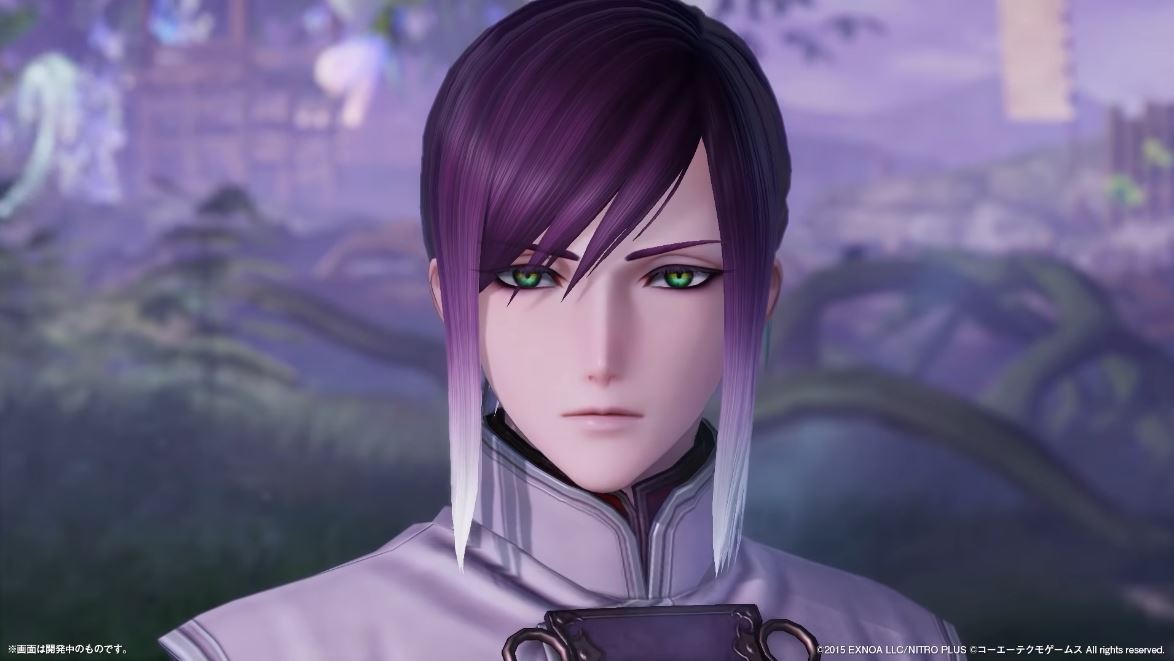

We know (or I hope you know) that I am an avowed fanfic lover. I wrote 1.7 million words of fanfic before embarking on the Eirenic Verses, and it is the sole reason that my series exists. Without that no-pressure training, I never would have gained the confidence to create my characters – and I wouldn’t have gotten in my million practice words.
Speaking of fanfic, I recently revivified my Archive of Our Own account to release a freebie AU Eirenic Verses story, “An Unfortunate Encounter in Bewerian State Park.” Yes indeed, authors can write fanfic of our very own OCs.
The story takes about an hour to read, and you do not require any context to enjoy it. Just sit back, relax, and marvel at how fucking stupid Cerie Korviridi is. Leave a comment if you love me!
Back to the point. Not every fanfic author wants to write original fiction, which is perfectly acceptable. You are not a lesser writer for wanting to play with someone else’s toys. Maybe it’s just a fun hobby for you, and you feel monetizing would destroy your spark.
But, if you have always had the itch to write your own series, fanfiction is the optimal testing ground. You can do anything you like without the stress of publishing, and you already have a built-in potential fanbase.
Today, I’ll offer you some suggestions for how to refine your craft through intentional fanfic practice. This is an opportunity to identify your voice, deconstruct characterization, and find the genre you love most – or develop a more versatile register if you want to play with all sorts of genres. Let’s get into it.
⤝❖⤞
Perform close reading on technique.

Every writer intuitively or intentionally employs technique. They’ve absorbed it from books, movies, social media posts, just about everywhere, and discharged that into their own writing.
So, even in the simplest fanfic by a novice, you will find a range of literary devices and techniques. For example, parallelism can work at the sentence level or even at the plot level; two character may undergo a similar quest and face similar dangers without realizing it.
One of my favorite forms of parallelism, which I have used in both my fanfic and original fiction, is to have the same character (or different characters) use the same phrase but in completely different contexts. This formed the basis for my story “Shattered Pieces,” where the protagonist uses the same insult he did hundreds of fics back – but this time he really means it. For reals.
I recommend checking out Purdue OWL (the gold standard for everything literary) and reviewing their lists of terms. While you read, jot down the devices and techniques you see being used, then consider how you might employ it in your own work. Set out to create a fic that uses one specific literary device at least once, or frame the entire project around a device.
⤝❖⤞
Draft your Annoyance List.

We are often better able to see what we don’t like through someone else’s work because we are too close to our own. We cannot hold the same objectivity with something we created, even after we let things sit for a while.
Now, of course you should not tell any writer that you’re using their work to fix your own. Don’t leave mean comments or offer unsolicited critique to fanfic writers; remember they’re doing this for fun just like you are.
Instead, take private notes in Notepad or wherever about things you see that annoy you. It could be characters using therapy speak, melodramatic language, overly purple prose, or overusing epithets (my personal sin). If you want, include the example as a quote.
This exercise should prime you to see the same problems in your own work. You’ll remember how much you disliked that problem in the other story, so you’ll want to remove it somehow.
You can do this with traditionally published fiction as well, because a lot of tradpub is honestly garbage if you stop and look at it for more than a few seconds. And it might make you feel better to see that people got paid to write total slop. Or make you feel worse, I don’t know.
⤝❖⤞
Mimic an established author’s style.
Many creative fiction classes use this exercise, and for good reason: you can discover your preferred style through someone else’s. I also discussed it in my article about finding your unique voice.
But you don’t need to pay a professor lots of money to do it. In fact, you can do it using the characters you already love.
Find a piece from your favorite author and then insert your characters into it. Don’t just swap the names around, of course; find a parallel plot that would fit your characters and then force yourself to write in that author’s style.
When you’re done, reread and figure out where it doesn’t sound quite like what that author would do. Why? Was this an artistic flourish or difficulty translating it into the author’s work? This can show you what you naturally do in your writing, which shows that your voice is different.
⤝❖⤞
Write the same scene from different POVs.

The goal here is to pin down characterization by identifying how each character thinks. Every character processes the world through their unique blend of traumas, cognitive distortions, defenses, and values. It’s why certain characters feel alive even in third-person POV, while others feel flat: the authors hasn’t internalized the character’s perspective.
Pick a few characters you like and come up with a plot. Then use each POV to tell the same story through their eyes. They might have a more whimsical take, a straightforward one, a melodramatic one: whatever feels true to their original depiction.
It helps if you use the same cast in all the POVs. Not only does this truly make the scene feel like a separate lens from each character, but it also lets you explore how characterization shifts depending on the POV.
Remember while you are writing that characters will not have equal access to information, which helps train your Theory of Mind. If you think the character doesn’t know something, then don’t include it in their POV; add it to someone else’s.
You’ll also want to consider how different characters think about one another and shift their depictions based on that perspective. If two characters are lovers, they will use more romantic language, place more emphasis on describing their partner than anyone else. Antagonists will prioritize the other character’s negatives. Two characters that barely know each other will barely register each other.
⤝❖⤞
Try out new writing disciplines.

As I said in my post about etiquette for non-writers, writing is an enormous field. Far larger than you might realize if you only encounter fiction. Legal, SEO, scientific, magazine, historical, social media, business comms, journalism: they all have slightly different standards and approaches, even subgenres of their own.
What’s fascinating about fanfiction is that you can absolutely try out these disciplines without any consequence if you want. I did this in several of my fanfictions, including “Joya no Kane” and “Swordbound, We Spiral Downward.”
In “Joya no Kane,” one chapter is all excerpts from different magazines that slowly tell the story of how the Revisionists were created and why time has stopped in 2205. You can see that there are different standards and approaches even within magazine writing, which you may not have consciously registered when reading them.
“Swordbound, We Spiral Downward” plays with a different register: academic journal articles. It sounds completely outside of fiction because it has a different purpose than entertainment.
The goal here isn’t to discover a passion for writing cooking articles or moving into academia. Rather, it’s to understand how language is employed in specific contexts and identifying the right register for the story you want to tell.
You might also find that you like that multimedia approach and want to employ it in your own story. This is a genuine discipline within fiction that has produced some incredible work; the entire Sherlock Holmes series uses it, and Murakami also employs that “found footage” style.
⤝❖⤞
Write an AU.

An AU – whether that’s bringing fantasy characters to our world, or making an isekai of our-world characters – is a fantastic way to explore characterization and understand what makes a given series tick. Like I mentioned in my quality assurance checks for characterization, being able to pull a character out of their world and still make them feel in-character demonstrates whether they are fully actualized and internally coherent.
Through this exercise, you’ll be able to break down what makes a character feel like themselves, which is usually not their role in the plot itself. You can also see how setting interacts with characterization and how it shapes the stakes of a story.
Alternate Universe works in just about any fandom, but it’s harder in some than others. Touken Ranbu, my old fandom, is extremely hard to write in an AU because the character backstories are such a critical aspect of how they are written, and those backstories would be very hard to include in our world.
The difficulty of making an AU helps you see what story elements feel essential and what are just window dressing. If there truly could not be a story without those structural elements, then you’ve learned how specific parts of the plot impact a story’s feel.
I love coming up with AUs for my characters that I will probably never write. Or that I have written, like my Appalachian Eirenic Verses AU, as mentioned upfront. Which is hilarious and you should absolutely go read it.
Anyway, being able to come up with AUs for my characters is a sign that I know them inside and out; they are not gimmicks, not plot points, but real people who I understand.
⤝❖⤞
Play with genres.

The same canon can feel radically different depending on the frame, which would be the genre. You can take a children’s story and turn it into a gritty cop procedural without the characters feeling OOC, or you can turn a cop procedural into a romcom.
Touken Ranbu is like this on purpose. You have gritty thrillers, like Katsugeki Touken Ranbu, and light-hearted slice-of-life animes, like Touken Ranbu Hanamaru. There are even stage adaptations and musicals that approach the canon from yet another perspective. Same characters, same mannerisms, same plot, completely different vibe.
So with this exercise, similar to the author exercise, we’re learning how genre conventions change the mood of a story and how they impact characterization. Different genres will reveal new aspects of the same character and force them to make novel decisions.
This isn’t always successful if the canon’s characterization isn’t very good, so you might find that it’s hard to stretch certain characters into different genres. Which also teaches you something about characterization, as you’ll start to figure out the specific craft failures of the source material. You might, unfortunately, have your fandom ruined by this, and I’m sorry in advance.
⤝❖⤞
Try “Five Times and One Time”

The “Five Times Character Did X and One Time They Didn’t” or vice versa is a beloved and well-documented fanfic convention. The purpose of it is to show how character actions determine outcomes, a key element of making an agentic character. If their decisions change nothing, then they’re not actualized and act more like cardboard cutouts.
Of course, this is typically used for “will they won’t they” romance, like missed chances and so on. But you can use it for all sorts of things. Maybe it’s five times they tried to rob a bank and one time they succeeded. Maybe it’s five times they killed someone and one time they didn’t. The possibilities are endless.
⤝❖⤞
Invert a trope.

Tropey writing isn’t bad writing. These formulas scaffold an emotional situation by providing a convenient way to engineer the outcome. We complain about tropes in writing because it’s a way to deride fanfic authors, but the greatest literary pieces in the world have also used these tropes. Forced proximity is practically a necessity in a locked-door mystery, and no one would mock the writers for doing that.
But tropes are almost more fun to break than they are to play with. By breaking a trope, you get to see why it works in the first place – and what workarounds you may find that could create an even more interesting situation.
So, for example, say you have the “only one bed” trope. Now break it. There’s too many beds! Why are there too many beds? Is this a problem? Why is it a problem? Maybe the “too many beds” suggests that one of the beds is a mimic, and the characters have to guess which one is the fake before they get eaten.
Or take a usual AU, like coffee shop AU, and make it something other than a cozy romance. Make it a spy thriller. Make it not romantic at all.
Come up with a list of your favorite tropes (or your least favorite, that’s fine too). Figure out what the intended purpose is, then find a way to violate that while still creating an interesting story.
I did some trope-breaking in my most recent project, Shadow and Sword (coming June 23, 2027). In this book, Mordrek and Uileac are on a little adventure together, which is already stressful because the two of them do not get along. (If you’ve read any of my books, you’ll understand precisely why.)
There will be an only-one-bed situation. It will not be resolved in the way you expect.
⤝❖⤞
Much as “serious authors” might deride fanfic – or become protective of their IP – it is a legitimate artform with its own norms. It’s also a wonderful playground that releases the pressure inherent in publication, helping writers find the joy in their writing.
As I said before, you don’t have to embark on an original fiction if you don’t want to. You also don’t have to use every single fanfic you write as practice. Sometimes you might want to play around without any purpose other than making up a fun scenario.
Still, fanfiction can be a tremendous intentional practice if you approach it with the same intensity that published authors approach their work. I think about it sort of like a flight simulator. Each flight simulator has some of the presets managed for you, just like fanfic gives you some presets: ready-made characters, backstory, scenarios. Over time, you can rely less on those presets until you have something wholly original.
I have already mentioned a few times that my own OCs are amalgamations of my favorite characters: hair colors, eye colors, a basic shape of the personality. These then grew more distinct as I tinkered until there was only a faint impression of the inspiration.
Uileac Korviridi is nothing like Uguisumaru from Touken Ranbu; even a hardcore Touken Ranbu fan would have a very hard time picking out any similarities beyond the physical form. Different personality, different backstory, different goals and nervous habits and fighting style. The only thing that really remains is that they both have green hair and their names start with U.
I shudder to think what would happen if Uguisumaru and Uileac met; it hurts my brain a little to imagine. They’re just too distinct and would not get along.
Frankly, I’m not sure both would survive the encounter. It’d probably become a dogpile scenario where each party’s friends and family try to mediate before getting sucked into a melee free-for-all.
But, regardless of how these two would get along, Uileac never would have been invented if I didn’t love Uguisumaru first. I took what I cared about and kept shifting it around, adding new influences, until I had something wholly my own.
Many original fiction authors have done the same process; some influences are more obvious than others, but we have each taken something from somewhere. That’s just how the creative process goes.
Which means that if you come to really love a fandom, you can leapfrog off it until you land in brand new territory that someone else will love too. Who knows? Maybe a few years down the road, you’ll have fanfic of your characters out there in the world. I’m certainly hoping that day comes for the Eirenic Verses, as it would be the greatest honor.
